 Fermento


 App of the Day
from the creators of
 murmur
 Layered
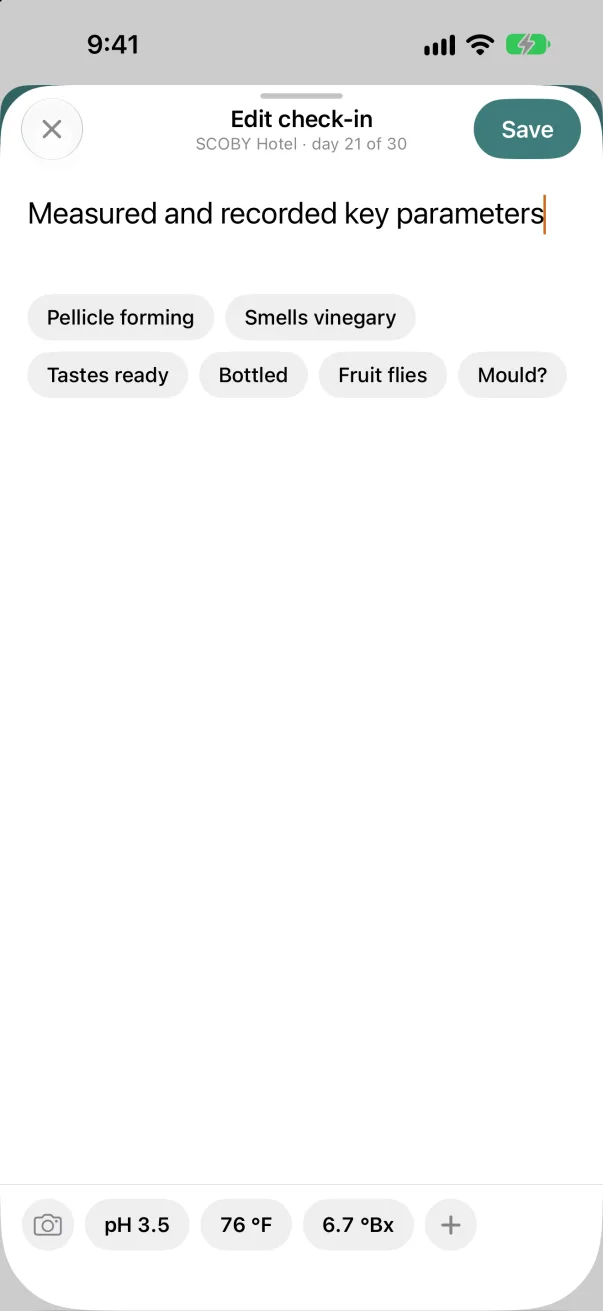
A log does two jobs. It tells you what to repeat when a batch turns out well, and it tells you what changed when one does not.
Batch log
Batch: Started:
- Ingredients, by weight
- Salt % or starter amount
- Vessel and where it sits
| Date | Time | Temperature | pH | Looks, smells, tastes | What I did |
|---|---|---|---|---|---|
What goes at the top
The recipe by weight. Grams, so the batch can be repeated and scaled.
The salt percentage or the starter amount. This is the number that most changes how a ferment behaves. The calculators work it out.
Where it sits. A jar by the oven and a jar in the cellar are different ferments.
What goes on each line
Temperature. It explains most of the difference between a fast batch and a slow one.
pH, if you have a meter. A falling pH is the plainest sign that fermentation is working.
What you saw, smelled and tasted. Bubbling, cloudy brine, a sour smell, a film on top.
What you did. Pressed it down, burped the jar, topped up the brine, moved it to the fridge.
Paper or app
Paper works. It stops working when you have six jars, a starter and a reminder you forgot. Fermento keeps the same log for every batch, adds the photos, and tells you which one needs you today.
If you sell what you ferment, you need a different sheet, with a critical limit for every check. See the HACCP log sheets.
Updated 11 November 2026.
Questions
What should a fermentation log include?
The recipe by weight, the salt percentage or starter amount, the start date, and a line for each check with the temperature, the pH if you measure it, what you saw and what you did.
Do I need to log pH at home?
No rule asks a home fermenter for it. A pH reading does tell you that a ferment is acidifying. The guidance cited in Fermento's vegetable plan looks for the pH to fall below 4.6 within a week.
Is there a log sheet for food businesses?
Yes. A business log has a critical limit for each check and a record of what was done when a reading was out. The HACCP log sheets page has both sheets to print.